

Building Resilience in African Child Respiratory Health
The BREATHe Lab at the University of Cape Town seeks to improve child respiratory health through an integrated omics approach. Led by Dr Felix Dube, the lab focuses on investigating how changes in the bacterial pathogen colonisation and transmission dynamics impact respiratory health, to inform vaccine initiatives and mitigate antimicrobial resistance.
Advancing Child Respiratory Health in Africa
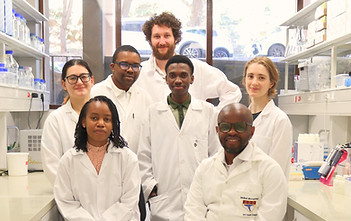
Respiratory infections remain a leading cause of child mortality across Africa, driven by antimicrobial resistance, under-researched pathogens, and limited diagnostic capacity. Yet the potential of multi-omics approaches and biotherapies to transform child lung health is still largely untapped.
The BREATHe Lab is closing this gap by investigating the microbial and molecular mechanisms that shape respiratory disease and resilience. Through its state-of-the-art molecular microbiology platform at UCT, and a growing team of postdoctoral fellows and postgraduate students, the Lab is advancing evidence that strengthens epidemic preparedness and informs new solutions for long-term child lung health, contributing to a future where every African child can breathe freely.
Our Approach
Our vision is an Africa where children can BREATHe and function optimally, through improved respiratory health.
Our mission is to advance interdisciplinary multi-omics research to understand the complexity of the respiratory microbiome, towards long-term child lung health.
To achieve this, the BREATHe Lab's work focuses on three interconnected priorities:

Disease progression and resistance
Using integrated omics (genomics, proteomics and metabolomics) approaches to investigate how lower respiratory tract infections emerge, spread, and mechanisms of antimicrobial resistance.

Restoring microbiome resilience
Studying the respiratory microbiome to identify ways of maintaining healthy microbial communities and developing novel diagnostics, live biotherapies, and targeted treatments.

Building Capacity and Collaboration
Training emerging African scientists and fostering research partnerships that strengthen Africa's leadership in respiratory health.
Research Focus
Our research focuses on two key priorities that together advance understanding of respiratory health and disease, and inform new solutions for child lung health.

Disease and Antimicrobial Resistance
Investigating pneumonia and other respiratory infections to identify microbial drivers of disease evolution and trace reservoirs of antimicrobial resistance.

Microbiome Balance and Complexity
Exploring how antibiotic use and infection disrupt microbial communities, and developing approaches to restore healthy respiratory microbiomes through novel diagnostics, live biotherapies, and targeted treatments.
Publications
Explore our latest research contributions to child respiratory health and microbial resistance.
Sputum bacterial load and bacterial composition correlate with lung function and are altered by long-term azithromycin treatment in children with HIV-associated chronic lung disease
Abotsi RE, Dube FS, Rehman AM, Claassen-Weitz S, Xia Y, Simms V, Mwaikono KS, Gardner-Lubbe S, McHugh G, Ngwira LG, Kwambana-Adams B, Heyderman RS, Odland JØ, Ferrand RA, Nicol MP; BREATHe study team.
Nasopharyngeal microbiota in South African infants with lower respiratory tract infection: a nested case-control study of the Drakenstein Child Health Study
Claassen-Weitz S, Xia Y, Hannan L, Gardner-Lubbe S, Mwaikono KS, Harris Mounaud S, Nierman WC, Workman L, Dube FS, Africa S, Patel F, Allen V, Ah Tow Edries L, Zar HJ, Nicol MP.